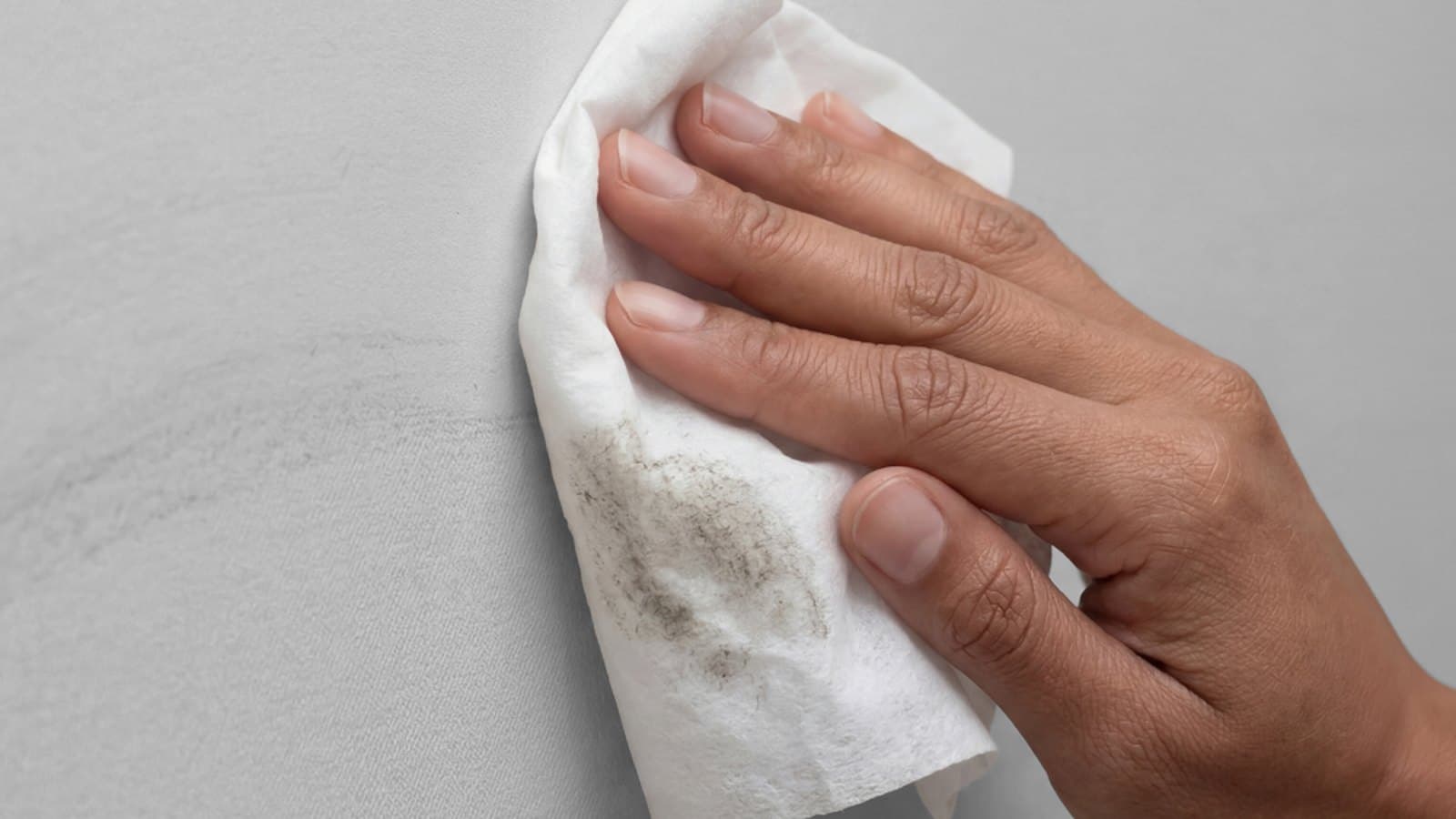
The truth about mold
You swabbed the bathroom, or set out a $10 Petri dish, and a week later it's covered in fuzz. It looks alarming. It usually isn't.
You swabbed the bathroom, or set out a $10 Petri dish, and a week later it's covered in fuzz. It looks alarming. It usually isn't. Mold is a normal part of the world outside and in, and finding some doesn't mean your home is unsafe. Here's what mold is, what the evidence does and doesn't link it to, and how to tell a real mold problem from a normal amount of spores.
What mold is
Molds are fungi that spread through microscopic spores that float through the air. There are thousands of species. The ones you're most likely to meet indoors belong to a few common groups: Aspergillus, Penicillium, Cladosporium, and Alternaria1. They all live outdoors, and some always drift in through doors, windows, and on your clothes.
So the question isn't whether mold is present. It is. The question is how much, and whether it's actively growing inside. Mold needs moisture to grow2, so these are the places to look first:
Under sinks, around the tub, behind the washer, at the roof line.
Anywhere water has sat before, including before your time in the house.
Windows that fog up and walls that stay cold and wet.
Basements, bathrooms without a fan, closets on outside walls.
Why your cheap test shows mold everywhere
Mold spores are in almost all indoor and outdoor air. The EPA says it's impossible to get rid of every mold spore indoors3. What makes something a mold problem is moisture that lets mold grow.
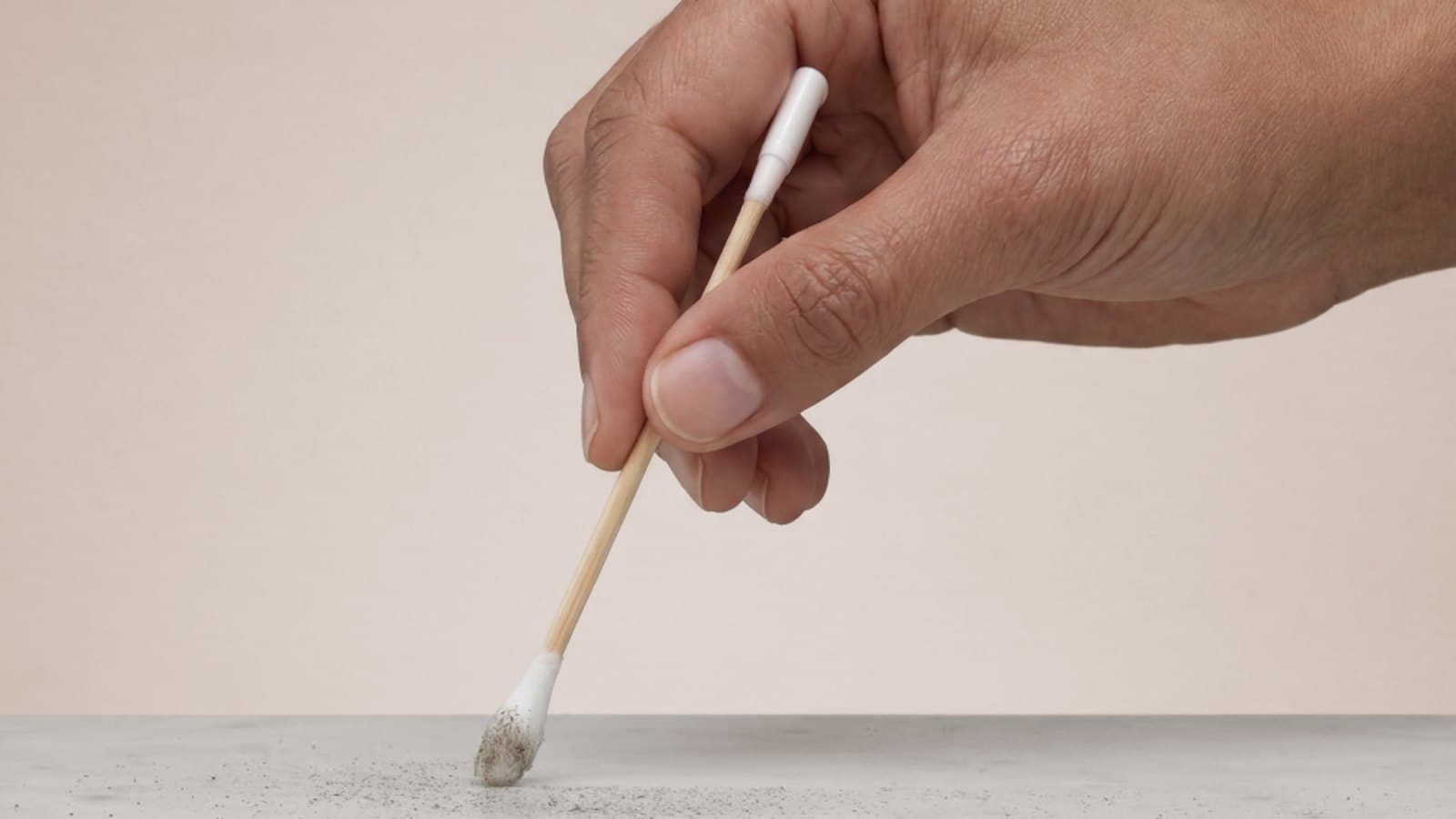
You swab the spot you're worried about, and the lab looks for fungal structures and spores and identifies what types are there.
Good places to swab: the grout, the window track, the seam behind the washer, the area around the HVAC unit. Samples are analyzed by our accredited partner lab, SimpleLab, and results arrive in about 10 days. A swab can't tell you the total amount of mold in your home. It can tell you whether that dark patch is actually mold, what kind, and roughly how much relative to other types, so you know where to focus.
What the evidence links mold to
The clearest links are to breathing and allergies6–8. Mold exposure is linked to allergy-like symptoms such as sneezing, congestion, and itchy eyes, and it can trigger or worsen asthma in people who are sensitive. Dampness and mold in homes are linked to a 30–50% increase in respiratory and asthma-related outcomes.
You'll also find much broader claims online: that household mold commonly causes vague symptoms throughout the body, or a condition called "mold toxicity." The evidence for these is much weaker9,10. Finding mold in your home doesn't mean it's making you sick.
What to do first
- 1Find the water
Look for leaks, stains, condensation, and musty smells.
- 2Fix the source of the moisture
Mold that has water will come back no matter how well you scrub.
- 3Swab what you're not sure about
If you can't tell whether a patch is mold, or what kind it is, a swab test will tell you.
- 4Know when to call a professional
Widespread growth, repeated water damage, or mold that returns after cleaning is the point to bring in a professional inspector.
- 1.Shelton, B. G., Kirkland, K. H., Flanders, W. D. & Morris, G. K. Profiles of airborne fungi in buildings and outdoor environments in the United States. Appl. Environ. Microbiol. 68, 1743–1753 (2002).
- 2.Dannemiller, K. C., Weschler, C. J. & Peccia, J. Fungal and bacterial growth in floor dust at elevated relative humidity levels. Indoor Air 27, 354–363 (2017).
- 3.U.S. EPA. A Brief Guide to Mold, Moisture and Your Home. US EPA (2014). Link
- 4.Institute of Medicine, Board on Health Promotion and Disease Prevention & Committee on Damp Indoor Spaces and Health. Damp Indoor Spaces and Health. (National Academies Press, Washington, D.C., DC, 2004). Link
- 5.Bush, R. K., Portnoy, J. M., Saxon, A., Terr, A. I. & Wood, R. A. The medical effects of mold exposure. J. Allergy Clin. Immunol. 117, 326–333 (2006).
- 6.Fisk, W. J., Lei-Gomez, Q. & Mendell, M. J. Meta-analyses of the associations of respiratory health effects with dampness and mold in homes. Indoor Air 17, 284–296 (2007).
- 7.Mendell, M. J., Mirer, A. G., Cheung, K., Tong, M. & Douwes, J. Respiratory and allergic health effects of dampness, mold, and dampness-related agents: a review of the epidemiologic evidence. Environ. Health Perspect. 119, 748–756 (2011).
- 8.Kanchongkittiphon, W., Mendell, M. J., Gaffin, J. M., Wang, G. & Phipatanakul, W. Indoor environmental exposures and exacerbation of asthma: an update to the 2000 review by the Institute of Medicine. Environ. Health Perspect. 123, 6–20 (2015).
- 9.Hurraß, J. et al. Medical diagnostics for indoor mold exposure. Int. J. Hyg. Environ. Health 220, 305–328 (2017).
- 10.Borchers, A. T., Chang, C. & Eric Gershwin, M. Mold and human health: A reality check. Clin. Rev. Allergy Immunol. 52, 305–322 (2017).
- 11.Patterson, T. F. et al. Practice guidelines for the diagnosis and management of aspergillosis: 2016 update by the infectious diseases society of America. Clin. Infect. Dis. 63, e1–e60 (2016).
- 12.Kosmidis, C. & Denning, D. W. The clinical spectrum of pulmonary aspergillosis. Thorax 70, 270–277 (2015).
- 13.Latgé, J.-P. & Chamilos, G. Aspergillus fumigatus and aspergillosis in 2019. Clin. Microbiol. Rev. 33, e00140–18 (2019).
Nestwell screens your home environment. Results describe your water, air, or dust and are not a medical diagnosis.
Frequently asked questions
- Does a moldy Petri dish mean my home has a mold problem?
- Not on its own. Mold spores are in almost all indoor and outdoor air, and a Petri dish gives whatever lands on it an ideal place to grow. A fuzzy plate shows that your air has spores, which all air does. What makes something a mold problem is moisture that lets mold grow inside.
- What does the evidence link household mold to?
- The clearest links are to breathing and allergies. Mold exposure is linked to allergy-like symptoms and can trigger or worsen asthma in people who are sensitive. The evidence for broader claims, like "mold toxicity," is much weaker. People who are immunocompromised face a real risk of serious fungal infections.
- What should I do first if I find mold?
- Find the water. Look for leaks, stains, condensation, and musty smells, and fix the source of the moisture, because mold that has water will come back no matter how well you scrub. If you're not sure whether a patch is mold, swab it.