Is my Brita doing anything?
The water tastes better, so it must be working. Probably. Here's what pitcher filters actually remove, where they fall short, and how to check yours.
Most kitchens have one: the pitcher in the fridge door, with a cartridge you keep meaning to change. The water tastes better, so it must be working. Probably. But "working" depends on what was in your water to begin with.
Countertop pitcher filters are one of the easiest ways to cut down what ends up in your glass. They can reduce certain contaminants. No filter removes everything. What yours does depends on the filter model, the contaminant, your starting water, and how often the cartridge gets swapped. So the better question isn't "Does my filter work?" It's "Does my filter remove what's actually in my water?"
Below: what these filters do, where they fall short, what other treatments cover the gaps, and how to tell whether yours is earning its spot in the fridge.
What a pitcher filter actually does
Water runs through a replaceable cartridge on its way to the reservoir. Most cartridges rely on two materials.
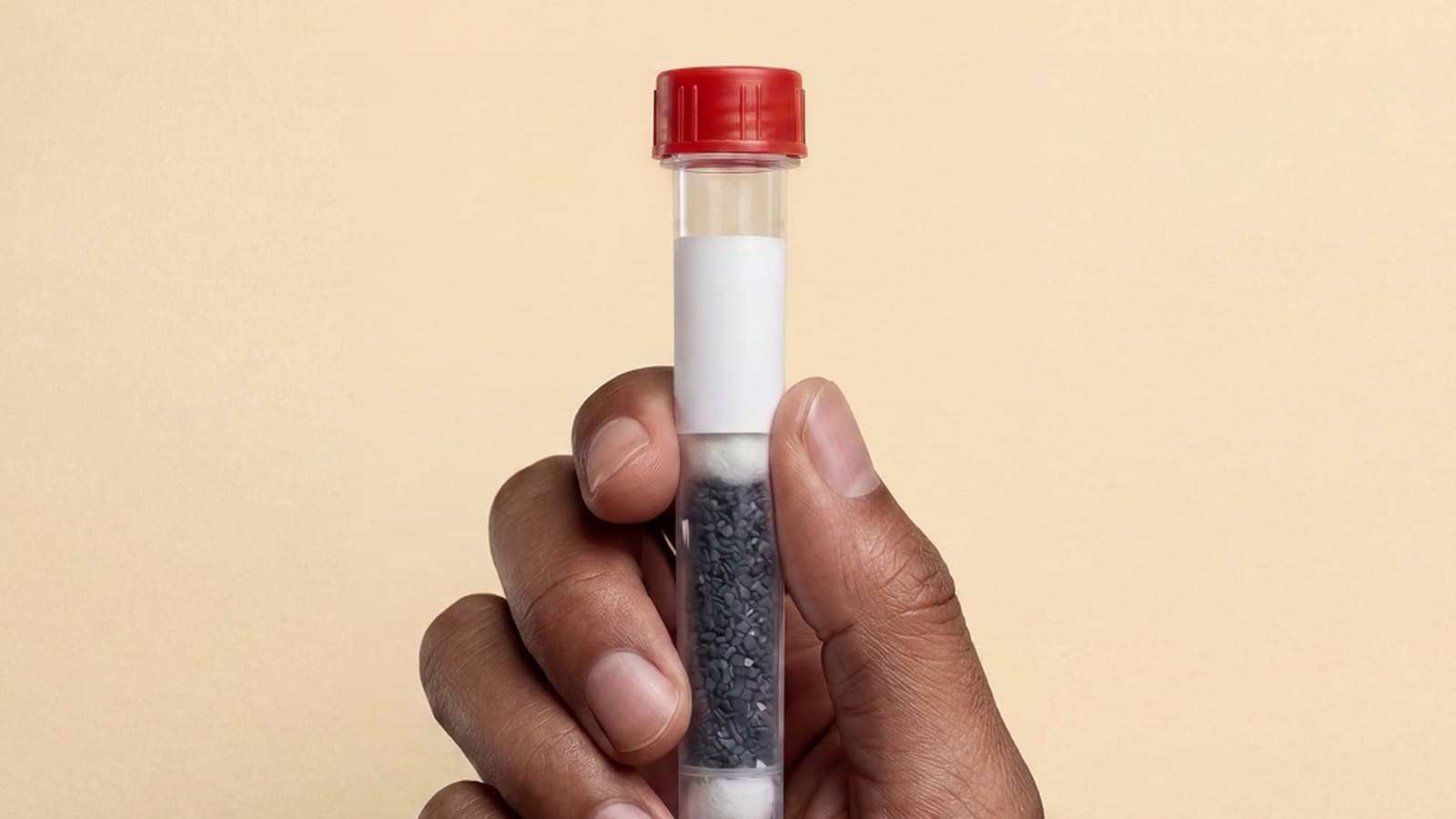
A very porous form of carbon. Certain organic chemicals stick to its surface as water passes over it. It's what takes the edge off chlorine's taste and smell.
Trades certain dissolved metals for less concerning ones, depending on the filter.
Different cartridges, even from the same brand, carry different certifications and claim to reduce different things. A filter is a tool for specific contaminants, not a universal cleaner.
What a pitcher can and can't remove
Here's how pitcher filters stack up against some common contaminants.
| Contaminant | Can a pitcher filter help? | The catch |
|---|---|---|
| Chlorine | Often | The most common reason taste improves |
| Lead | Some filters | Depends heavily on the model and its certification |
| Copper | Some filters | Model dependent |
| PFAS | Some filters | Varies by filter and by compound |
| Pesticides and VOCs | Some filters | Depends on the chemical and the filter |
| Nitrate | Usually not | Standard carbon filters aren’t built for it. Typically needs a different treatment |
| Arsenic | Generally not | Needs specialized treatment |
| Bacteria | Generally not | Filtering isn’t the same as disinfecting |
| Hardness and minerals | Limited | Not a substitute for a water softener |
A few rows are worth a closer look. PFAS, a family of long-lasting synthetic chemicals, show up in about 45% of U.S. tap water, according to the USGS (2023). Some pitchers reduce some PFAS, but not all of them equally. Arsenic and nitrate usually call for reverse osmosis, an under-sink system that pushes water through a membrane fine enough to hold back dissolved salts and metals. Bacteria call for disinfection, like boiling or UV treatment.
Why does my water taste better, then?
A noticeable change in taste or smell usually means the filter is removing chlorine or other compounds that affect flavor. That's real, and it's nice. But better-tasting water isn't necessarily safer water.
When your filter might not be doing much
Three reasons come down to the filter itself.
The contaminant in your water isn't one that filter's technology captures.
Once the carbon fills up, it stops grabbing much of anything.
Water is passing through too quickly, or the pitcher isn't being used the way the instructions say.
Two more depend on your water, and they're the tricky ones.
Your water didn't contain much of the targeted contaminant to begin with.
The level is higher than that type of treatment is designed to handle.
You can't tell which of those applies without knowing what's in your water.
Choose a filter for your water, then check it
Most people buy the fix before they know the problem. With water, testing answers two separate questions: What's in my water? And how much of it is my filter actually removing?
- 1Test your unfiltered tap water
That shows which contaminants are present and at what levels.
- 2Match a filter to what you found
Look for that specific contaminant on the filter's certification, not just the front of the box. If the test turns up something a pitcher isn't built for, like nitrate or arsenic, that's your cue to look at reverse osmosis or another targeted treatment.
- 3Test the filtered water
Comparing the two samples tells you whether the filter is doing its job in your kitchen, with your water.
Lowering what's in your drinking water lowers your exposure to it. Which fix is worth it depends on what's actually there.
Nestwell screens your home environment. Results describe your water, air, or dust and are not a medical diagnosis.
Frequently asked questions
- Does a Brita filter remove PFAS?
- Some pitcher filters reduce some PFAS, but not all of them equally. Look for the specific compound on the filter's certification, not just the front of the box, and test your water to find out whether PFAS are there to begin with.
- Does better-tasting filtered water mean it's safer?
- Not necessarily. A change in taste usually means the filter is removing chlorine. Water that tastes perfectly fine can still contain lead, arsenic, nitrate, or PFAS.
- How can I tell if my water filter is working?
- Test your unfiltered tap water, then test the filtered water. Comparing the two shows what the filter is removing in your kitchen, with your water.