
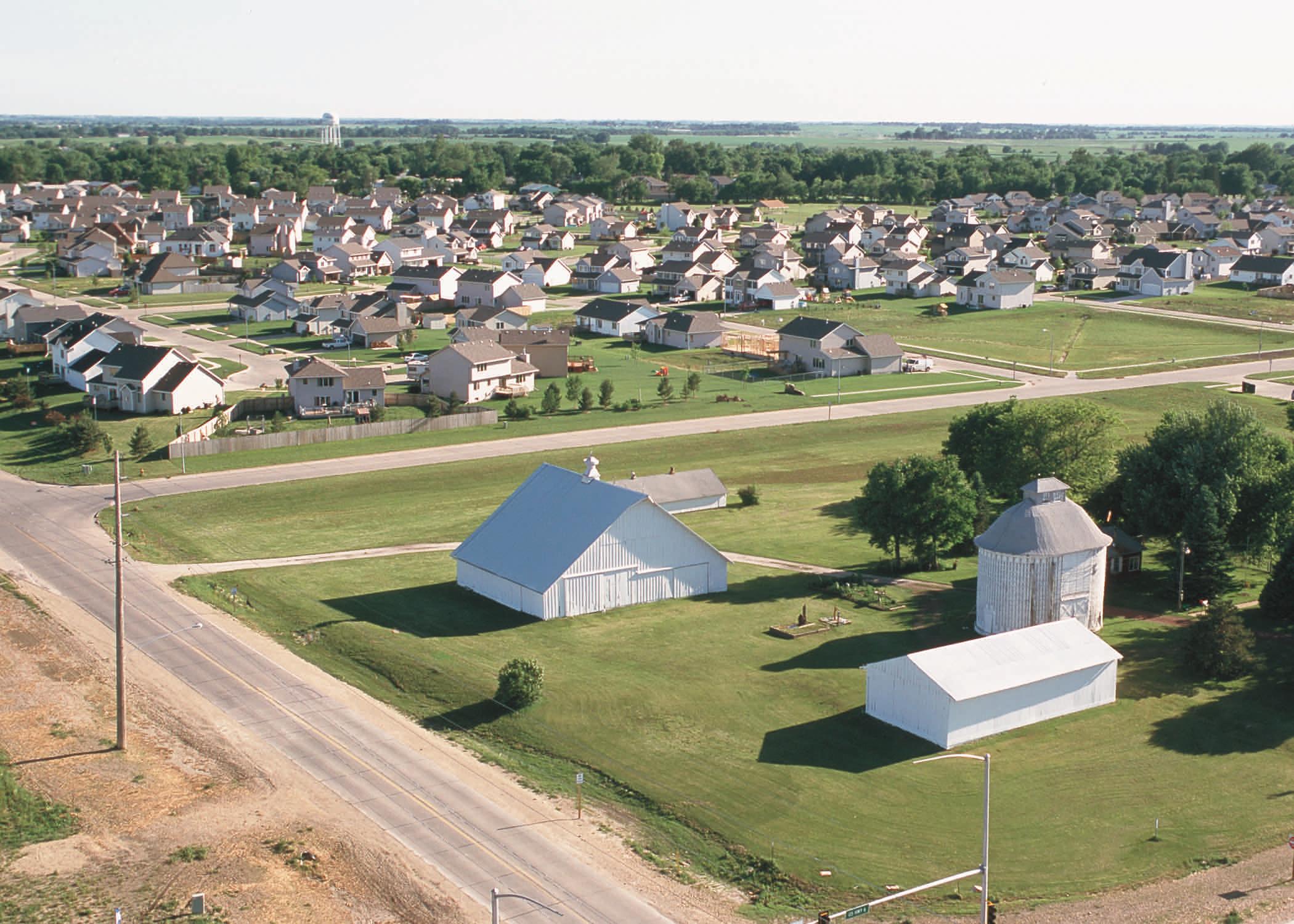
What we’ll send you

Usually $108FreeLead and 24 other metals in your tap or well water.
Usually $183FreeLead and other metals in your yard or garden soil.
Usually $61FreeLead in dust on window sills, porches and floors.
Free shipping to you, a prepaid label back to the lab, and lab analysis included.
What happened
On the morning of November 25, about 5 tons of lead azide were detonated at the Iowa Army Ammunition Plant in Middletown, Iowa.
As a precaution, families within 20 miles were asked to stay inside with windows closed, and some households near the plant were asked to leave. The USDA estimated up to 250 farms could be in the affected area.
Why it matters: Lead doesn’t break down. Once it settles, it stays in soil and dust for years. Lead exposure is linked to a higher risk of preterm birth and low birthweight1, and in adults to cardiovascular disease2. It’s classified as a probable human carcinogen3. Young children and pregnant women are most at risk.
What we know so far: Early EPA air readings found no detectable airborne lead after the blast. That’s good news. But air readings can’t tell you what settled on your porch, in your garden soil, or in the dust inside your home. Forecast maps show where dust might have drifted. A test shows what’s actually there.
What we’re doing: Nestwell is covering the cost of soil, water and dust testing for households in the affected area. SimpleLab, our accredited partner lab, analyzes every sample, and you’ll get results in about 10 days, in plain language.
If you live in the area, claim your free kit with the form on this page. If you know someone who does, please send this to them.
And if you’re a founder, investor, or care about the health space and want to contribute, we’d love to hear from you at ben@gonestwell.com.
Where the Army’s model puts the lead dust
Settled lead stays close to the plant; airborne lead travels further southwest. The shaded ZIP codes and the green bands around them make up the affected area.
- Settled lead at or above 100 µg/ft². EPA window-sill limit
- Settled lead at or above 5 µg/ft². EPA floor-dust limit
- Airborne lead, hours 1 to 4. Above the 0.18 µg/m³ detection limit
- Airborne lead, about hour 8. Near Macon County, MO
- Within 50 miles of the plume. Part of the affected area
- Within 25 miles of the plume. Part of the affected area
- 5 and 20 mile rings. The earlier evacuation and stay-indoors alerts
All 28 ZIP codes (46,395 people)
| ZIP | Town | Modeled | Surface | Air |
|---|---|---|---|---|
| 52624 | Denmark, IA · Lee Co. | ≥ 100 µg/ft² | 97% | 10% |
| 52656 | West Point, IA · Lee Co. | ≥ 100 µg/ft² | 25% | 28% |
| 52627 | Fort Madison, IA · Lee Co. | ≥ 100 µg/ft² | 11% | 14% |
| 52658 | Wever, IA · Lee Co. | ≥ 100 µg/ft² | 7.5% | – |
| 52625 | Donnellson, IA · Lee Co. | ≥ 100 µg/ft² | 34% | 45% |
| 63465 | Revere, MO · Clark Co. | ≥ 5 µg/ft² | 32% | 51% |
| 52626 | Farmington, IA · Lee Co. | ≥ 5 µg/ft² | 26% | 52% |
| 63453 | Luray, MO · Clark Co. | ≥ 5 µg/ft² | 9.6% | 89% |
| 63445 | Kahoka, MO · Clark Co. | ≥ 5 µg/ft² | 3.8% | 11% |
| 52619 | Argyle, IA · Lee Co. | ≥ 5 µg/ft² | 1.2% | 8.3% |
| 63543 | South Gorin, MO · Scotland Co. | Air, hours 1-4 | – | 82% |
| 63432 | Arbela, MO · Scotland Co. | Air, hours 1-4 | – | 69% |
| 63531 | Baring, MO · Knox Co. | Air, hours 1-4 | – | 63% |
| 63563 | Rutledge, MO · Knox Co. | Air, hours 1-4 | – | 62% |
| 63534 | Callao, MO · Macon Co. | Air, about hour 8 | – | 62% |
| 63532 | Bevier, MO · Macon Co. | Air, about hour 8 | – | 52% |
| 63547 | Hurdland, MO · Knox Co. | Air, hours 1-4 | – | 29% |
| 63474 | Wyaconda, MO · Clark Co. | Air, hours 1-4 | – | 25% |
| 63530 | Atlanta, MO · Macon Co. | Air, about hour 8 | – | 20% |
| 63537 | Edina, MO · Knox Co. | Air, hours 1-4 | – | 19% |
| 63555 | Memphis, MO · Scotland Co. | Air, hours 1-4 | – | 19% |
| 63538 | Elmer, MO · Macon Co. | Air, about hour 8 | – | 17% |
| 63558 | New Cambria, MO · Macon Co. | Air, about hour 8 | – | 16% |
| 63552 | Macon, MO · Macon Co. | Air, about hour 8 | – | 6.1% |
| 52573 | Mount Sterling, IA · Van Buren Co. | Air, hours 1-4 | – | 5.5% |
| 63533 | Brashear, MO · Adair Co. | Air, hours 1-4 | – | 1.8% |
| 63539 | Ethel, MO · Macon Co. | Air, about hour 8 | – | 1.1% |
| 52620 | Bonaparte, IA · Van Buren Co. | Air, hours 1-4 | – | 0.1% |
Share of each ZIP’s area inside the modeled footprint. Population from the 2020 Census.
How it works
- 1Check your ZIP code.
- 2Tell us where to send the kits.
- 3Collect your water, soil and dust samples and mail them back with the prepaid label. See the tips below.
- 4See your results, explained, in your Nestwell account.
Questions
Who is in the affected area?
Any household in one of the 28 ZIP codes the Army's modeled plume reaches (in Lee and Van Buren counties, Iowa, and Clark, Scotland, Knox, Adair and Macon counties, Missouri), or in a ZIP code within 50 miles of it. Check yours above. Homes there get one free set of kits each, while supplies last.
Is it really free?
Yes. All three kits, shipping to you, the prepaid return label and the SimpleLab lab analysis are all free. We do not ask for a card.
Why test water, soil and dust?
Lead dust settles onto surfaces like porches and window sills, and onto soil, and wells draw from the ground beneath it. Air monitors show what was in the air at the time; officials have said sampling is what shows where lead actually settled.
How do I take good samples?
Follow the instructions in each kit. A few things make the results more useful.
Dust: Wipe a surface you have not cleaned since the detonation, like a window sill, the floor inside your main door or the porch. If you clean first, you wipe away the very dust you want to measure.
Soil: Take it from bare ground where dust could have landed and stayed, like where kids play or where you grow food, not from under fresh mulch or new sod.
Water: Collect it the way the kit asks, which for metals is usually the first water from the tap in the morning, before anyone runs it.
Mail your samples back soon after you collect them.
Why do most kits go to homes in the plume?
Results from homes where the model puts the lead tell us the most about where it actually landed, so most kits are held for those ZIP codes. Homes within 25 and 50 miles have their own, smaller allocations, so the closest homes are never crowded out.
Should I get a blood lead test?
If you are worried about exposure for yourself or your children, ask your doctor. Iowa HHS says a blood lead test is the way to check a person's exposure. These kits test your home instead: the water, soil and dust around you, so you know where lead is and what to clean up.
Do I need an account?
No setup is needed. We use your email to create a Nestwell account for your results and send you a link to it.
Is Nestwell part of the Army or the EPA?
No. Nestwell is an independent home testing company. Samples are analyzed by our accredited partner lab, SimpleLab.